Rheumatoid arthritis (RA) is an autoimmune inflammatory disease mainly of the joints. The immune system is normally designed to attack foreign bodies like bacteria and viruses. In rheumatoid arthritis, the immune system abnormally attacks the joints causing inflammation and pain. Although the joints are the main targets in rheumatoid arthritis, many other tissues like the lungs or the heart may also become involved. The prevalence of rheumatoid arthritis is about 1%.
The cause of rheumatoid arthritis is not known. It is thought that some people are more susceptible to developing rheumatoid arthritis because of genetic factors. Certain environmental exposures may tip the susceptible person over to develop RA. The following are some of the risk factors thought to be important in development of RA:
How does rheumatoid arthritis develop?
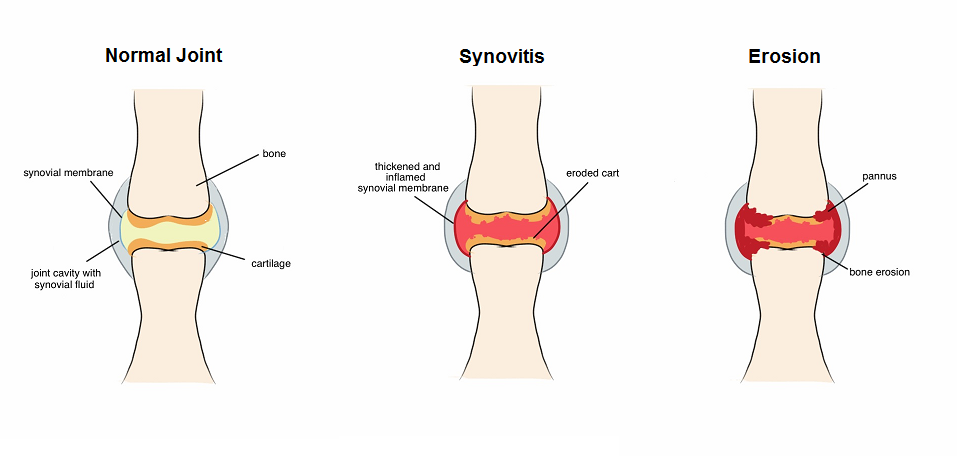
Once the immune system is abnormally triggered, it produces antibodies like rheumatoid factor (RF) and cyclic citrullinated peptide (CCP). These antibodies in turn activate macrophages and cause an inflammatory reaction in the synovium, which is the lining of the joint. As the inflammation continues, excess synovial fluid is produced which can lead to visible swelling of a joint. The joint lining also can thicken, forming a fibrous tissue called pannus. The enzymes produced by the pannus can eventually lead to damage of the joint and cartilage.
In longstanding active rheumatoid arthritis, persistent inflammation and pannus formation can cause destruction, deformity, and even fusion of the joint.
See also: